By Zeng Junxiong, GBE intern reporter
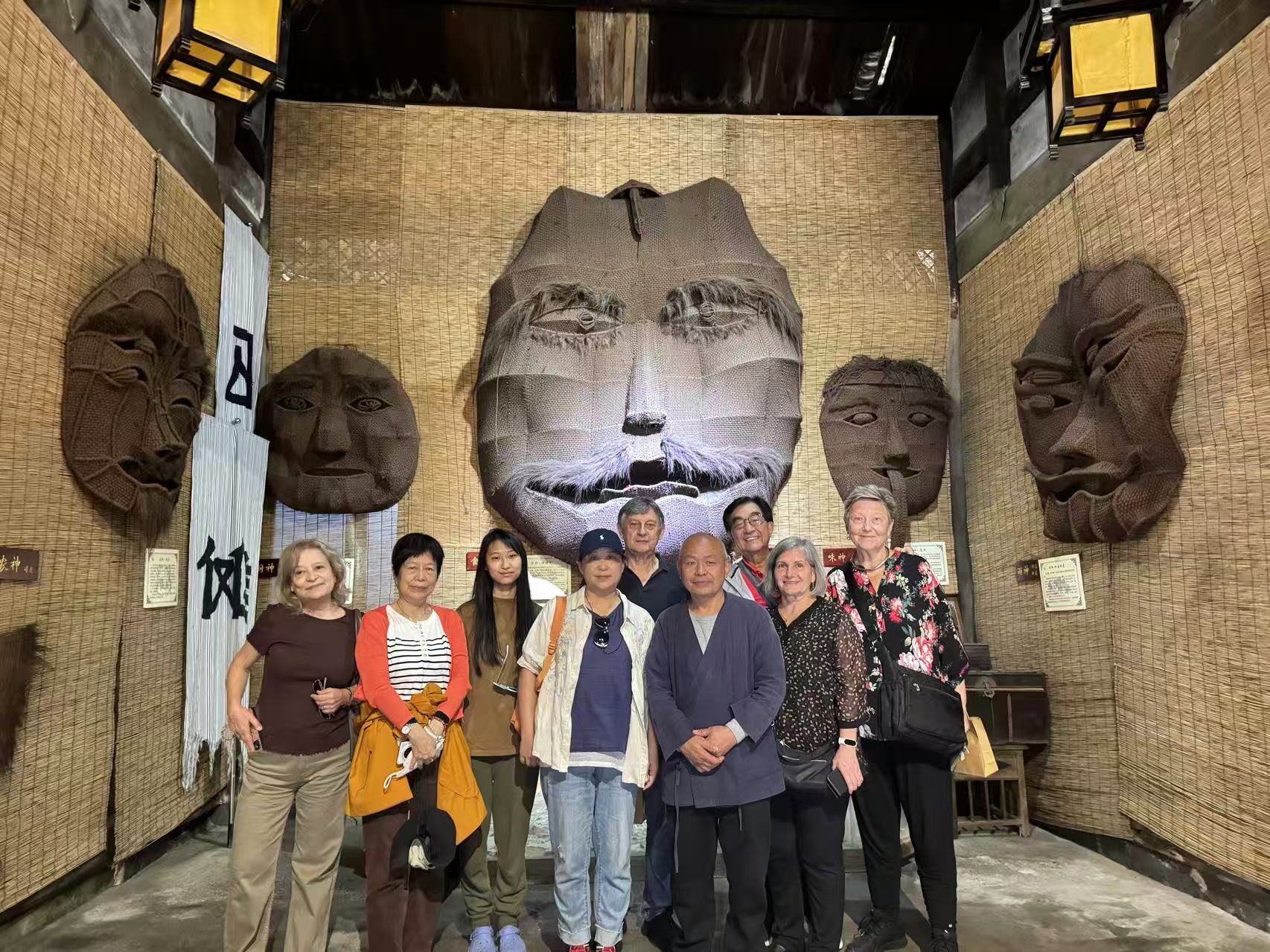
In mid-May, a group of cultural representatives from Portugal and other Portuguese-speaking countries gathered in Guangzhou for a two-day cultural immersion to celebrate International Museum Day. Rather than simply attending exhibitions, they engaged in a deeper, more immersive experience of China, visiting historic sites, exploring intangible cultural heritage, tasting local cuisine, and practising Chinese language skills in real-life settings.
The programme, titled “Total Immersion Chinese Experience,” was initiated by Macau Pioneer International Cultural Communication Center in collaboration with the Orient Foundation and BABEL Cultural Organisation (BABEL). It offered a new model for cultural exchange, one not confined to galleries or classrooms, but rooted in shared experience and direct human connection.
Encountering China through art
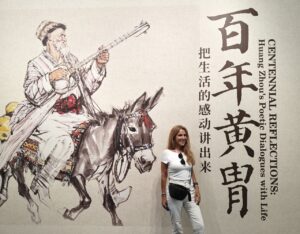
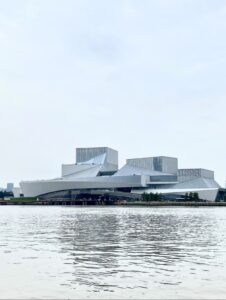
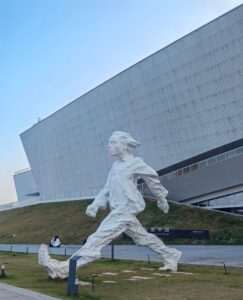
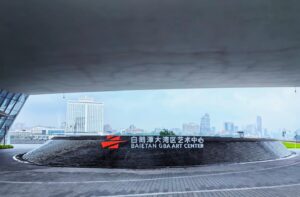
The delegation visited the Greater Bay Area Art Center in Guangzhou, a comprehensive cultural complex that houses the Guangdong Museum of Art, the Guangdong Museum of Literature, and the Guangdong Intangible Cultural Heritage Museum.
At the Guangdong Museum of Fine Art, Catarina Cottinelli, Head of the Macau Delegation of the Orient Foundation, paused in front of a Chinese landscape painting and reflected on its vertical perspective.
“The perspective in this Chinese landscape painting is created vertically, it differs from the Western method of depicting depth. In Western art, there are usually layers that recede into the background, but here, perspective is built by layering upwards. It’s amazing and beautiful,” she said.
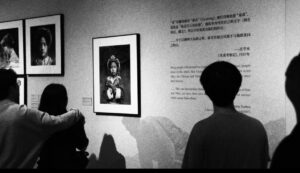
Elsewhere in the exhibition halls, Margarida Saraiva, a representative of BABEL, was deeply moved by a series of black-and-white photographs documenting early ethnographic expeditions through Sichuan and Qinghai. Taken in the 1930s and 1940s by Chinese anthropologist Zhuang Xueben, the images portray scenes of striking intimacy and quiet strength, a Qiang man riding a zipline across a mountain valley, a noble young girl standing with poise and dignity, and a porter labouring up a steep trail with silent determination.
“These photographs felt like a journey through time,” Saraiva said. “They helped me connect not just with history, but with the emotions and humanity of this land.”
As participants moved between exhibitions, conversations, and daily life experiences, the distinction between art and culture, display and dialogue, began to blur. For many in the group, most of whom live and work in Macau, the experience was a powerful reminder that cultural exchange exists not only in institutions but also in everyday encounters.
From Macau to the world: How the Orient Foundation fosters exchange
In promoting cultural exchanges between China, Portugal, and Portuguese-speaking countries, the Orient Foundation in Macau plays a pivotal bridging role. As a cultural institution dedicated to deepening the relationship between China and Portugal, the Foundation closely connects Macau and the wider GBA with the Portuguese-speaking world through various exchange programmes.
One of its flagship initiatives is the annual Orient Foundation Art Award, which supports young and emerging artists. Open to Macau residents, students, and artists of any nationality aged 18 to 35 who live or work in Macau, the award includes a cash prize of MOP10,000 and a one-month fully funded residency in Portugal, covering airfare, accommodation, and other benefits totalling at least MOP40,000.
“It’s aimed at promoting young artists and giving them the opportunity to undertake an internship in Portugal,” said Cottinelli.
Selected works are also exhibited in the Foundation’s gallery alongside the annual Autumn Salon, offering international exposure and institutional support. Winners are chosen by a panel of respected figures from the local art circle, ensuring both artistic merit and long-term impact.
While the programme currently focuses on artists based in Macau, the Foundation is actively exploring ways to expand its scope throughout the GBA. It has already collaborated with notable regional figures such as Alice Kok and organisations like Art for All to support artist residencies and thematic research across both Macau and Portugal.
Beyond the prize itself, the Foundation also offers artist residencies not only in Portugal but also in Macau, and potentially in other parts of the GBA.
“Artists, especially young or emerging ones, can apply for a residency to explore a specific theme or research a topic related to Macau and its connection with the Western world,” said Cottinelli.
“These exchanges are about more than just creating art. When you visit another country, you learn how people live, speak, and experience the world through all their senses. That is where real understanding happens.”
Applications for residencies are open and project-based, with a strong emphasis on personal exchange and mutual learning. Whether from China to Portugal or from Portugal to Macau, artists are encouraged to create new work inspired by cross-cultural exploration.
“Art is a form of communication that transcends language,” Cottinelli noted. “We believe cultural understanding comes from direct contact and lived experience.”
She emphasised Macau’s distinctive position: “Macau is a unique place,” Cottinelli said. “It serves as a bridge and a platform that concentrates this blend of East and West.” This dual heritage, she believed, makes the city a natural location for deeper cooperation across the Bay Area. Looking ahead, the Foundation aims to build partnerships with museums and art institutions throughout the region, encouraging exchanges based on mutual understanding and shared creativity.
Beyond visual arts, Cottinelli, an architect and educator, regards architecture as another powerful medium for cultural exchange. “Architecture, like art and music, is a universal language,” she explained. She believed that the fusion of Chinese and Portuguese architectural traditions provides not only aesthetic insights but also practical solutions to shared urban challenges such as density, digitalisation, and sustainability. “It’s about how we address common challenges and imagine better ways of living,” she said.
Connecting cultures: How BABEL facilitates artistic exchange
With its “Museum Without Walls” concept, the BABEL is actively breaking down regional and institutional boundaries to promote deeper cultural interaction between China and Portuguese-speaking countries. In the interview, its representative Saraiva shared several practical examples of exchange between the two sides, from student visits and collaborative art creation to the curation of public art projects, demonstrating a decentralised, cross-cultural cooperation model.
BABEL once organised a 15-day Sino-Portuguese student exchange programme, bringing together students from art and film colleges in both countries. They not only visited museums but, more importantly, created a short film together. This hands-on approach enabled cultural exchange to go beyond superficial visits, inspiring mutual resonance through artistic collaboration. As Saraiva said, “We always draw inspiration from history. Only by understanding the foundation can we create new artistic expressions.”
Currently, BABEL is also working with a Shenzhen foundation to promote the work of artists from Portuguese-speaking countries in the GBA. The project is open to all such countries, not just Portugal, bringing a wider range of cultural perspectives and creative voices. This open platform not only allows artists from Portuguese-speaking countries to enter China, but also gives Chinese audiences the opportunity to engage with a global art ecosystem.
However, cross-cultural communication is never achieved overnight. Saraiva pointed out that language barriers are an obvious problem, but even more challenging are the “unspoken” differences in cultural context, body language, social etiquette, and ways of thinking. These are often difficult to translate, yet they determine whether true understanding can be established. Therefore, BABEL emphasises the role of “cultural intermediaries”, especially those who have lived in two cultures for a long time, as they can understand and explain, thus building a more genuine bridge of understanding.
BABEL’s “Museum without Walls” concept is a concrete expression of this philosophy. By bringing art into public spaces and connecting different venues and communities through thematic curation, they allow art to flow freely, crossing linguistic and national boundaries. As Saraiva said, “We are not attached to a particular collection, but design cultural journeys repeatedly. The experience of art can and should happen beyond borders.”
From museum halls to city streets, and from structured programmes to spontaneous conversation, this Museum Day exchange in the GBA revealed how cultural understanding can grow in many forms, through seeing, doing, and connecting.
As China continues to deepen ties with Portugal and Portuguese-speaking countries, the GBA is fast becoming not only a meeting place for art and history, but also a living ground for shared experience, mutual learning, and future collaboration.