By Florence Gump
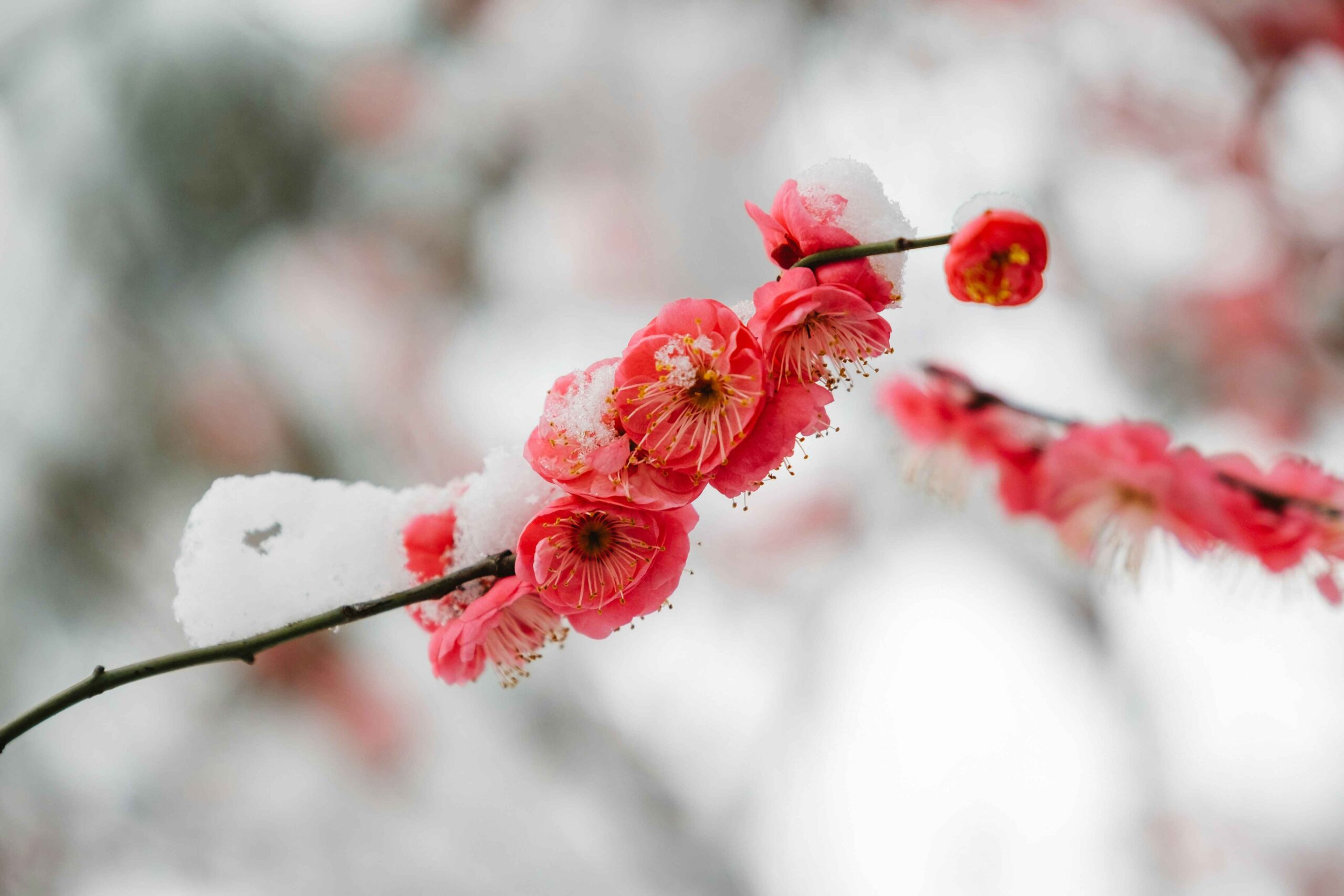
In China’s Twelve Flower Deities Calendar, the plum blossom presides over January, marking the very beginning of the new year.
As mentioned in my previous article Twelve Flower Deities (Serial one) in Great Bay Express Winter 2026, among these deities, each flower may correspond to more than one flower deity, and most are real historical figures who truly existed. They are revered as “flower deities” because of their profound connections with the respective flowers and the widespread admiration they receive. The same is true for the deity of plum blossoms.
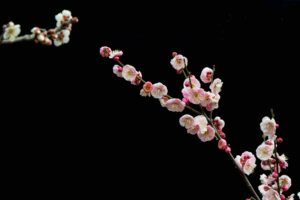
Among the renowned female deities of plum blossoms is “Lady Plum Blossom” Jiang Caiping (723–756 AD), a cherished consort of Emperor Xuanzong of the Tang Dynasty. She was famed for her passionate love of plum blossoms, to such an extent that even her title was conferred in honour of the “plum blossom”.
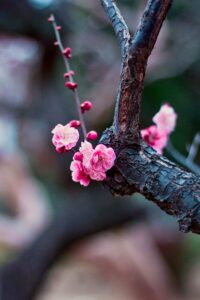
Another well-known female deity associated with plum blossoms is Princess Shouyang (382–444 AD) of the Southern Dynasties. According to legend, as she was resting one day, a gentle breeze carried a plum blossom onto her forehead, leaving a delicate imprint of five petals. Other women found this plum blossom mark highly attractive and began to imitate it. As a result, this gradually led to the emergence of one of the most popular makeup styles in ancient China – plum blossom makeup. From that moment, the princess, who appeared to be blessed by the plum blossom, became inseparably linked with it and was revered as the deity of plum blossoms.
However, among the various flower deities representing plum blossoms, the most famous is undoubtedly the poet Lin Bu (967–1028 AD) of Song Dynasty. He was a man of great talent and learning, yet indifferent to fame and fortune, never seeking favour with the powerful. His noble character earned him widespread admiration and he was held in high esteem by many Chinese literati. He lived in seclusion, cultivating plum blossoms and raising cranes, and never concealed his profound love for them. In fact, he remained unmarried throughout his life, taking plum blossoms as his wife and cranes as his sons. This has also become a well-known allusion in Chinese history, revered by people far and wide.
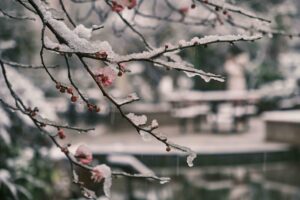
The plum blossom holds a significant place in traditional Chinese culture. It is simple yet elegant, and despite the harsh cold, it stands proudly against snow and frost, blooming tenaciously with a resilient posture. Chinese people highly esteem and admire this unyielding spirit, taking it as a role model to emulate. Many Chinese use the plum blossom as a symbol to express their determination and aspirations. Throughout history, in countless Chinese literary works, poems, paintings, calligraphy, operas, and other art forms, the plum blossom has been praised. It can be said that the plum blossom is one of the most important spiritual totems for the Chinese people.
The accompanying images in the article are from Unsplash.com