Cleo Lei
Patriotism, the first dialogue with Nuo’s universe, a glimpse of poverty alleviation, and the living breath of another China.
This journey belongs to the “Total Immersion Chinese Cultural Experience” series, initiated by Macau Pioneer International Cultural Communication Center.
We did not go to Western Hunan only for postcard views. We went to find a man who has spent 40 years weaving palm leaves into masks, and to stand on ground where history turned.
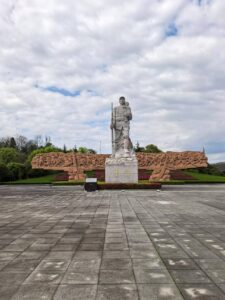
Victory sculpture outside of the Zhijiang Memorial Hall of Japanese Surrender, Hunan.
Zhijiang: Why we had to be there
Our first stop was Zhijiang. In 1945, Japan signed its unconditional surrender here. This was no random choice. We brought our international community to this place because we wanted them to understand: modern China did not emerge from nowhere. It was forged through suffering, resistance, and an unyielding will to rise again.
The surrender at Zhijiang was not just a Chinese victory. It was a turning point for Asia, for the world. Standing before the memorial arch, under an impossibly deep blue sky, we all felt it — the weight of history, not as a heavy stone, but as a quiet presence. Time seemed to stop. The air was clean. The clouds did not move. For a long moment, no one spoke.
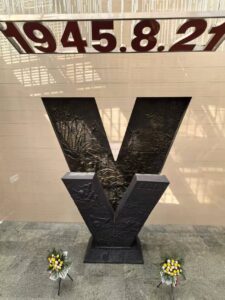
Victory sign in the entrance hall of the Zhijiang Memorial Hall of Japanese Surrender, Hunan.
Qianyang: Another world
The next morning, under a bright sky, we entered Qianyang Ancient City. No loud bars, no chain souvenir shops. Just polished stone lanes and the smell of fried fish and rice tofu drifting from family-run stalls. We sat on low wooden benches and ate fresh spring rolls and delicious fried sticky rice snacks. The old couple who made them had been doing this for decades.
“This,” someone whispered, “is what an ancient city should be — not a show for tourists, but a place where people still live.” Qianyang is so quiet it feels outside of time. Yet it is not empty. Behind every window there’s life, full of small treasures. We would return — there was too much we had missed.
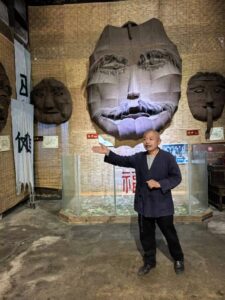
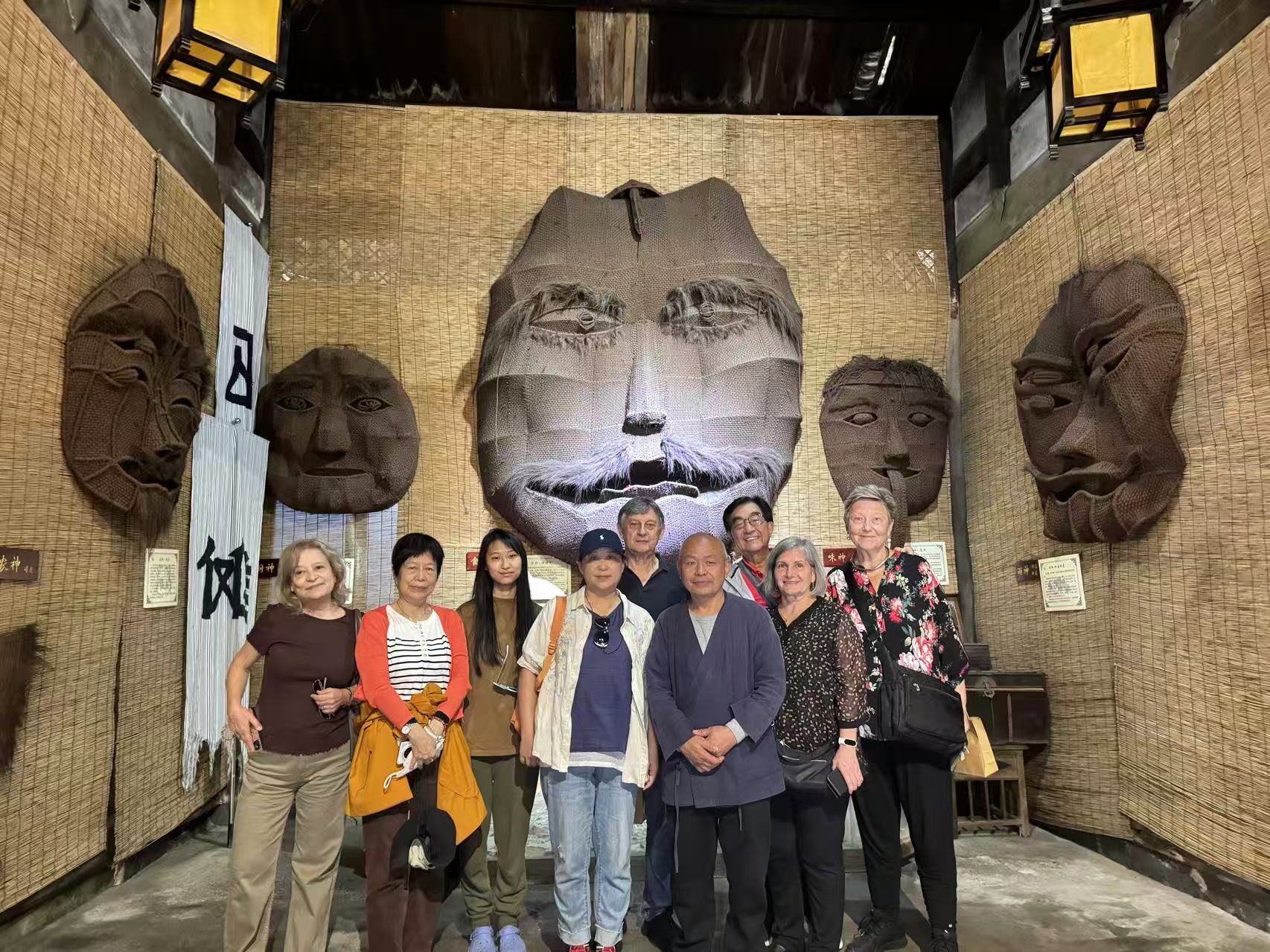
Yang Hanming, a master of Chenhe palm-woven Nuo masks, a keeper of Nuo rituals his family has served for generations.
The man who would not sell his masks
That afternoon, we arrived at Yang Hanming’s studio, hidden in a deep alley — arranged through our ongoing cooperation with local cultural authorities.
Yang is a quiet legend, a master of Chenhe palm-woven Nuo masks, a keeper of Nuo rituals his family has served for generations.
Palm-woven masks hung from the doorframe. He bent over a half-finished mask, looked up, did not rise, and simply said, “Sit.”
Then he began to speak. Not about his skill, but about Chinese characters.
“Nuo,” he said. The character combines “human” and “difficulty.” When humans face hardship, they raise a mask and question heaven and earth.
“Wu” — shaman. The top horizontal stroke is heaven. The bottom line is earth. The person in the middle is the bridge.
“Our ancestors hid the secrets of the universe in these characters,” he said. “You write them every day, but you no longer recognise them.”
He told us a story from the Classic of Mountains and Seas. A scientist with a hollow in his chest. When Yu the Great tamed the floods, a giant named Fangfeng arrived late and was executed. Fangfeng’s deputy, consumed by loyalty, drove a sword into his own chest. Yu was moved. He took a handful of grass, pressed it onto the wound, and brought the man back to life. But the hole remained, forever.
Yang looked at us. “That hole connects to black holes. To other dimensions of time and space.”
He weaves that hole into every mask.
Someone asked how long it took to make his largest piece. “128 days. Over 7000 metres of palm rope.”
“Has anyone tried to buy them?”
“Five years ago, five Japanese visitors offered 12 million yuan for my entire collection. They wanted to take everything back to Japan and have me teach there.” He paused. “I refused. This heritage belongs to China. It must stay on this land.”
The room fell silent. Not the silence of sentiment, but of awe.
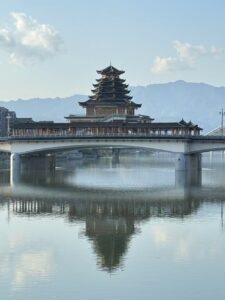
Wind and Rain Bridge, the longest covered bridge of its kind in the world in Zhijiang, .
Masks, grace, and the unmasked heart
What is a Nuo mask? It is not decoration. Not performance. In the ancient ritual, the moment a person puts on the mask, they cease to be themselves. They become the god, the ghost, the ancestor, the messenger between heaven and earth. The mask does not hide the face. It replaces it. And that new face holds power.
Some wear kindness like a borrowed garment, easily shed when convenience calls. Some mistake status for substance, forgetting that true worth is never worn on the outside. And some — the rarest — wear no mask at all. They offer help without calculation, standing by without expecting return, reminding us that grace still walks among us.
After so many journeys, we thought we had learned to expect the unexpected. We finally learned that we had no right to expect anything at all. Masks off, hearts open. We return with gratitude.
We carried these thoughts with us when we walked through Fenghuang Ancient City by the Tuo River. In the morning mist, the stilt houses floated like ink wash paintings. At night, thousands of lanterns reflected on the water like a shattered galaxy. Fenghuang is often associated with Shen Congwen’s famous novel, Border Town — not a specific place, but a state of being: slow, quiet, a little wistful, like river water that never stops flowing. We did not dwell on the novel. But standing by the river.
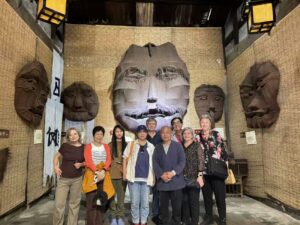
Group photo with Yang Hanming in his Nuo studio.
The stone village and the Miao market – why we go
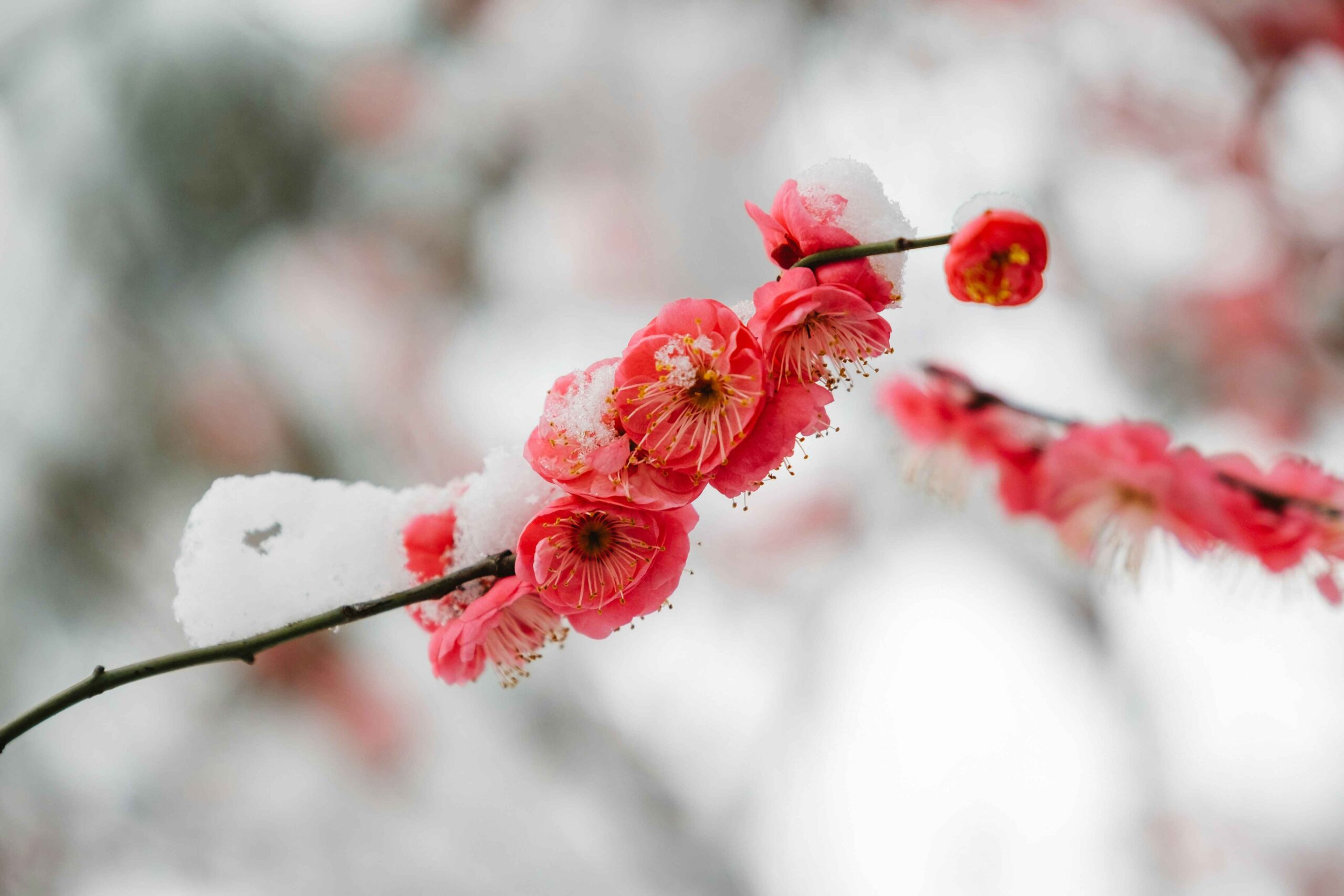
We also visited Zhushan Miao Village, built on a cliff. Eight hundred years old stone houses. Pear trees in full white blossom. This village was once the last place in China to lift itself out of poverty. And one of our goals, as Macau Pioneer, is to witness and support such transformations — not only with charity, but also with presence. We go, we learn, we share, and in doing so, we help these stories reach the world.
Then we went to an ethnic market — a pure Miao gathering, held on certain days of the lunar month. Old women bargain over handmade embroidery. Men with weathered hands sell bundles of fresh, local herbs. I still vividly remember how babies were carried in a bamboo-woven basket — a highly scientific design, allowing the baby to stand or sit. Locals are friendly. Young parents fed their child freshly made local snacks and recommended us to try some.
We brought it home
Yang Hanming is still weaving masks. Nuo is still alive. That lamp, lit 7000 years ago when the first shaman raised a mask to the sky, is still burning.
We return with gratitude — for everyone who chose to walk with us, and for the people of this ancient, resilient land who opened their doors and their stories.
Because in the end, what defines our journeys is not the landscapes, not the monuments, not even the masks. It is the human sparks hidden within them. Those who stay when staying is hard. Those who give without calculation. Those who remind us that when the dust settles, what remains is gold.
And Macau Pioneer? We merely opened the door. You walked through it.
This journey was organised by Macau Pioneer, a cultural platform bringing a community of international elites together to witness China’s living heritage — not as spectators, but as participants in a dialogue that has lasted millennia.
Visit https://www.facebook.com/macaupioneer for information about previous and future programs!