By Florence Gump
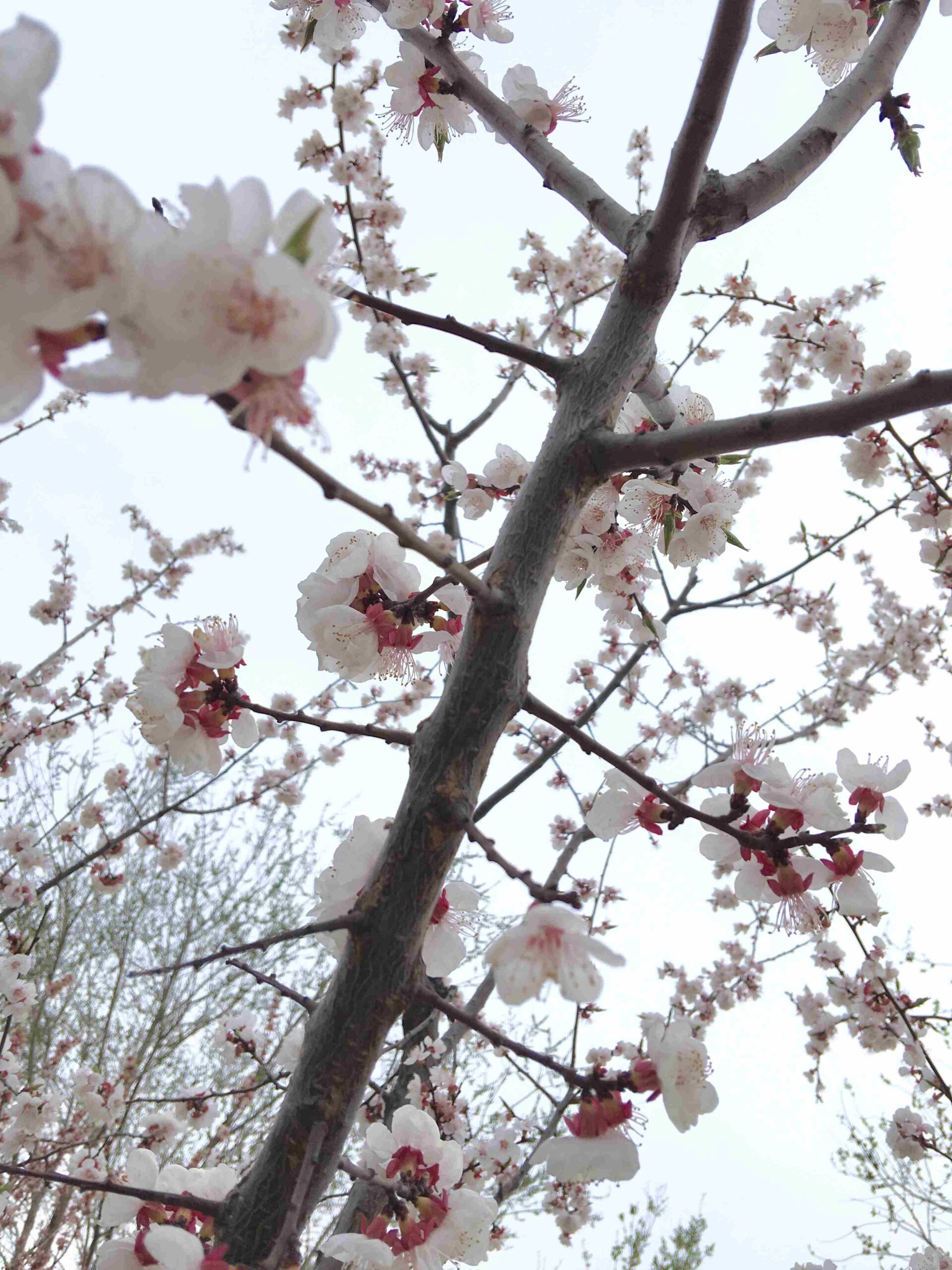
In China’s Twelve Flower Deities Calendar, the apricot blossom is anointed as the gentle ruler of the second lunar month, when spring first unfolds across the land. Yang Yuhuan (719–756 AD) — one of the most renowned imperial concubines in Chinese history, celebrated for her legendary beauty — is widely honoured as the female apricot blossom goddess, while Lu You (1125–1210 AD), the celebrated poet of the Southern Song Dynasty, is traditionally recognized as the male patron of the bloom.
Yang’s unparalleled beauty captivated the entire realm, winning her the emperor’s undivided favor — yet this very splendor sealed her tragic fate. She was made the scapegoat for a dynasty’s decline and unrest, until the fleeing emperor was forced to order her execution to appease his mutinous troops. Legend has it that when the rebellion was quelled, the grief-stricken emperor returned to the site of her death, only to find hillsides blanketed in blooming apricot blossoms. The flower’s crimson buds fade to soft pink at full bloom, then turn pure white as snow before falling — a trait known as “the three transformations of a delicate countenance”. Its short, dazzling bloom that fades swiftly mirrors Yang’s glamorous yet fleeting life, which is why later generations honoured her as the apricot blossom goddess to commemorate this legendary beauty.
Lu You’s bond with the apricot blossom is rooted in his timeless verses. With apricot blossoms and spring rain, he captured the very soul of the spring of south of Yangtze River, crafting an immortal line that etched the tender vision of early-blooming apricot flowers in the second lunar month deep into the nation’s cultural memory — making him the most iconic literary patron of the apricot blossom in Chinese cultural tradition.
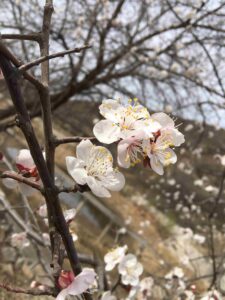
Looking back at the stories of Yang and Lu tied to the apricot blossom, their bonds with the flower do not seem as deeply intimate as the emotional connections between most other floral deities and their corresponding blooms. In fact, in the daily life of Chinese people, the apricot blossom is far more understated than many other flowers — even compared to visually similar blossoms like pear and peach flowers. This does not mean it is unloved; on the contrary, the apricot blossom has long woven itself into the very fabric of Chinese society at a profound, intimate level, so that it has become a familiar part of Chinese cultural daily life that people often take for granted.
In Chinese, the name for apricot blossom (xìng huā) sounds nearly identical to the words for “happiness” and “good fortune”. Its fruit also makes a fine, nourishing food, so many households in ancient China would plant apricot trees in their yards, believing that the blooming pale-pink blossoms would bring good fortune and joyful moments to the entire family.
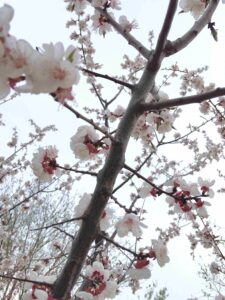
The most time-honoured custom tied to apricot blossoms traces back to the “Apricot Altar”, which was related to education. It is said that China’s greatest educator Confucius once gave lectures to hundreds of students under blooming apricot trees. To this day, the term “Apricot Altar” (xìng tán) in Chinese still refers to the education sector and all matters related to education.
The apricot blossom is also closely related to the imperial examination, ancient China’s most vital civil service selection system. In the Tang Dynasty (618-907 AD), exam results were announced just as apricot blossoms bloomed, and successful candidates gathered for grand feasts in the Apricot Garden. This earned the flower its alternate name “Success Bloom”, a symbol of top exam scores and a thriving official career. Even today, many students tuck a dried apricot blossom into their books before major exams for good luck.
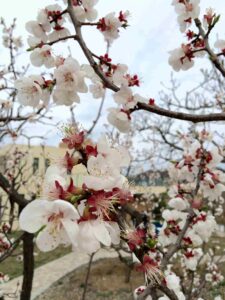
What’s more, there is a beloved tradition linked to Chinese traditional medicine: the “Apricot Forest”. In the Three Kingdoms period (220-280 AD), the renowned physician Dong Feng treated all his patients free of charge, only asking that they plant one apricot tree after making a full recovery. Over decades, a lush forest of apricot trees took shape. To this day, people still use the phrase “Apricot Forest Warm Spring” (Xing Lin Chun Nuan, a time-honoured compliment) to praise skilled, kind-hearted doctors, and families that have nurtured generations of distinguished physicians are respectfully honoured as “Apricot Forest Medical Clans”.
Many Chinese literati have long cherished the apricot blossom as an emotional anchor for their native homeland and the warm, tender memories tucked deep in their hearts. From the sacred lecture altar of Confucius to the warm apricot forest of healers, from the celebration of top exam honours to the soft spring strolls beneath blooming boughs, the apricot blossom has always been a quiet, warm witness to the most touching parts of traditional Chinese life.