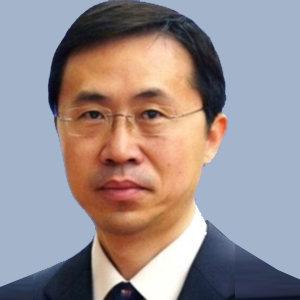
Jin Ming
In the quiet corridors of the Communication University of China (CUC), a seismic shift is underway that reverberates far beyond the campus gates in Beijing. The institution’s decision to discontinue 16 undergraduate majors, ranging from traditional photography to basic translation, is not merely a budgetary realignment or a response to fluctuating enrollment. Rather, it represents the first major “controlled explosion” in a national campaign to demolish the walls of industrial-age education and build a foundation for a future defined by intelligence and human-machine synergy.
As China navigates the onset of the 15th Five-Year Plan (2026-2030), the socio-political stakes of higher education have never been higher. We are witnessing the end of the “skills-for-hire” era and the dawn of a “logic-and-governance” epoch. The CUC reform serves as a localized blueprint for a national imperative: to ensure that the nation’s human capital does not become an ossified relic in a world where generative artificial intelligence (GenAI) can produce code, prose, and visual art in seconds.
The logic of “pruning for growth”
For decades, the expansion of Chinese higher education was characterized by “filling the gaps”, establishing a wide array of specialized majors to mirror the complexities of a booming industrial economy. However, as President Xi Jinping’s concept of “New Quality Productive Forces” takes centre stage, the metrics of success have fundamentally shifted. Economic growth is no longer driven by the sheer volume of labour, but by the revolutionary efficiency of technology and the innovation of “high-quality” talent.
From a socio-political perspective, the removal of majors like accounting, social informatics, and basic translation is a pragmatic recognition of “technological redundancy.” In the 2024-2025 cycle, AI models such as Sora and increasingly sophisticated Large Language Models (LLMs) demonstrated that foundational “tool-use” skills, the ability to operate a camera, transcribe a speech, or balance a ledger, are rapidly becoming commoditized. By “pruning” these branches, CUC and other leading institutions are redirecting scarce resources toward the “canopy” of the future: intelligent audiovisual engineering, digital storytelling, and game science.
Addressing the “social contract” of education
The move also signals a profound renegotiation of the social contract between the state, the university, and the student. Traditionally, a four-year degree was a static asset, a “terminal” certification of mastery. In the AI era, this model is dangerously obsolete. The new curriculum structures emerging from the CUC overhaul suggest that a degree must now be a “license for continuous adaptation.”
The curriculum is being bifurcated into two essential pillars: Universal AI Literacy and Elite Humanistic Insight. By making AI tools a standard component of every freshman’s toolkit, the university is democratizing technical power. However, the true value of the new majors, such as “Digital Theater” or “Brand Science”, lies in their focus on the “uniquely human”: ethical judgment, cross-cultural empathy, and the ability to ask the right questions of an algorithm. This is the “high ground” that AI has yet to conquer, and it is where China’s future leaders must be stationed.
Strategic sovereignty and global competition
Beyond the classroom, this academic reshuffle is a masterclass in strategic foresight within the context of global competition. The world is currently locked in an AI “arms race” that is often framed in terms of computing power and data sets. Yet, the true deciding factor will be human deployment. A nation that possesses the most advanced AI but lacks a workforce capable of integrating it into the social and industrial fabric will find itself in a bottleneck.
China’s centralized ability to pivot its educational system at scale, moving 20% of all university majors into alignment with national strategic goals by 2025, is a unique institutional advantage. While Western educational institutions often grapple with slow-moving tenure systems and decentralized curricula, China’s “top-down” professional optimization allows for a rapid synchronization between education and the needs of emerging industries, such as the low-altitude economy, smart manufacturing, and the digital cultural trade.
The challenge of transition
Of course, such radical reform is not without friction. The “lost generation” of faculty whose specialties are being phased out and the students caught in the transition require a robust social safety net and reskilling pathways. Socio-politically, the state must ensure that this “academic creative destruction” does not lead to a new digital divide, where only elite urban universities like CUC can afford to pivot, while others continue to churn out graduates with obsolete skills.
Furthermore, there is the philosophical risk of over-utilitarianism. We must guard against the urge to view students merely as “input components” for the digital economy. The humanities: philosophy, history, and the arts, must remain the bedrock of education, not as “skills” to be replaced by AI, but as the ethical compasses that guide how AI is used. CUC’s decision to maintain and enhance its “Regional and National Studies” suggests a healthy awareness of this, recognizing that international communication in the AI era requires more cultural depth, not less.
A blueprint for the 2030s
The bold moves by the CUC are a microcosm of the nation’s broader journey toward becoming a global innovation powerhouse. By “sweeping the floor” of outdated majors, the institution is making room for the “new guests” of the digital age: creativity, adaptability, and high-level synthesis.
The 2026 academic year will be remembered as the moment when the “ivory tower” finally acknowledged that the walls were being rewritten by algorithms. For policymakers, educators, or parents, the message is clear: the most dangerous path is the one that stays the same. To thrive in the 15th Five-Year Plan period and beyond, we must have the courage to let go of the industrial-era past and embrace the “intelligent-era” future. The “pruning” we see today is the only way to ensure a vibrant, productive harvest tomorrow.
Jin Ming is a Beijing-based commentator.
Disclaimer: The views and opinions expressed in the “Opinion” column are those of the authors and do not reflect the views or positions of this magazine.